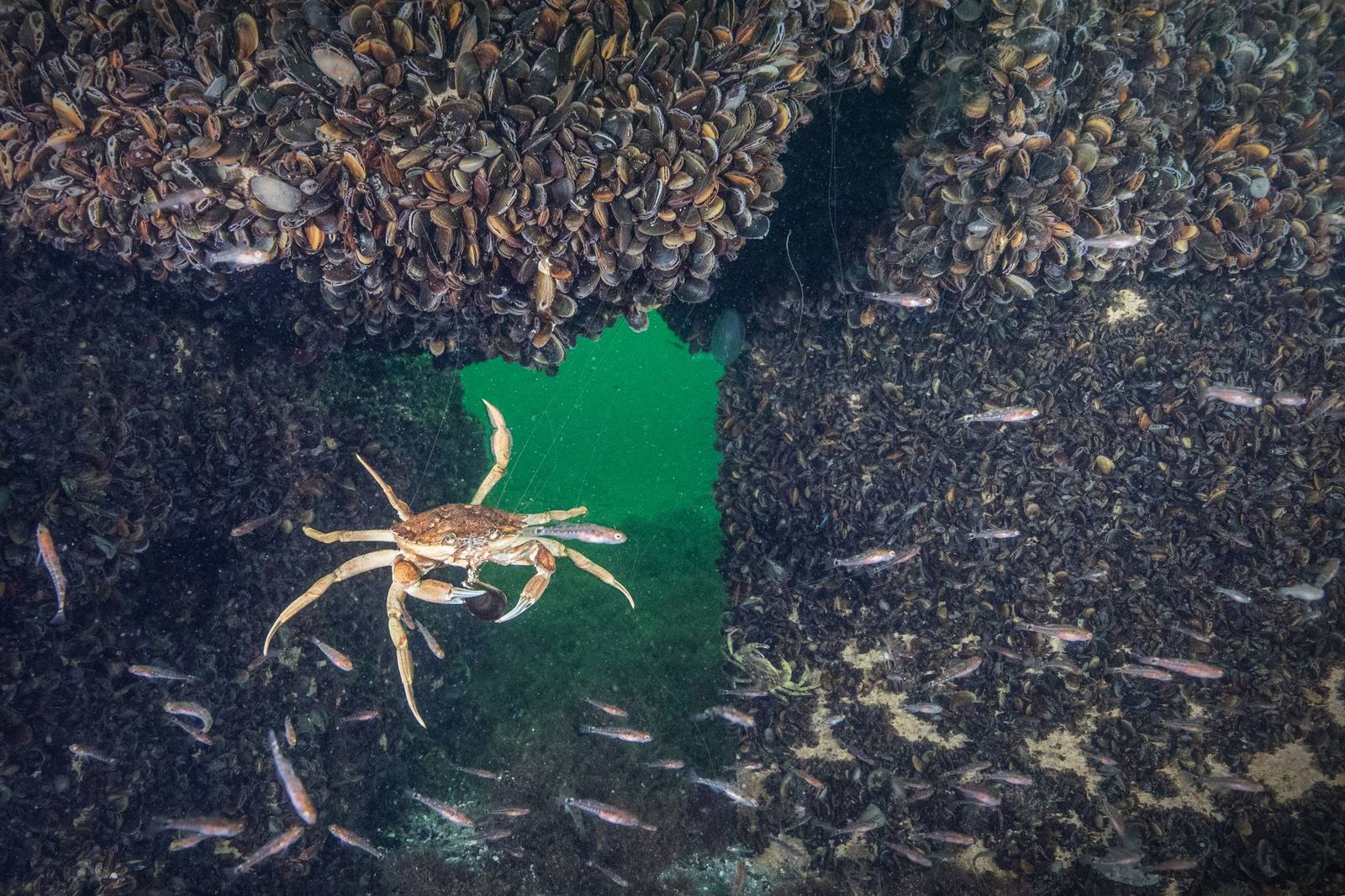

Students from Lakselv Upper Secondary School participate in an annual OCEAN CITIZEN field course at Institute of Marine Research’s field station. Their task is to collect as many species as possible from the intertidal zone. Photo credit: Institute of Marine Research.
Citizen involvement is at the heart of the OCEAN CITIZEN project and this autumn, 38 students from Lakselv High School helped bring that mission to life at the Institute of Marine Research (IMR)’s field station in Holmfjord, Porsangerfjorden.
Over two consecutive days, 33 first-year students (VG1) and five advanced Biology 2 students took part in hands-on field courses designed to build ecological understanding and spark curiosity about fjord life. The activities combined marine science, local stewardship, and real-world research linked to one of Europe’s northernmost artificial reef deployments.
Discovering biodiversity in the intertidal zone
The VG1 group began their day in the intertidal zone, where they collected seaweeds, algae, and small invertebrates along the shoreline outside the station. Using small baited traps, they also sampled species just offshore. Back in the wet lab, students identified their finds together with mentors from IMR and NIVA, learning how species diversity is shaped by climate change, environmental conditions, and ecological interactions.
In total, the students documented 44 species, which later formed the basis for digital field reports created in pairs. These reports reflected core curriculum goals such as exploring a self-chosen scientific question and evaluating methods used during fieldwork.
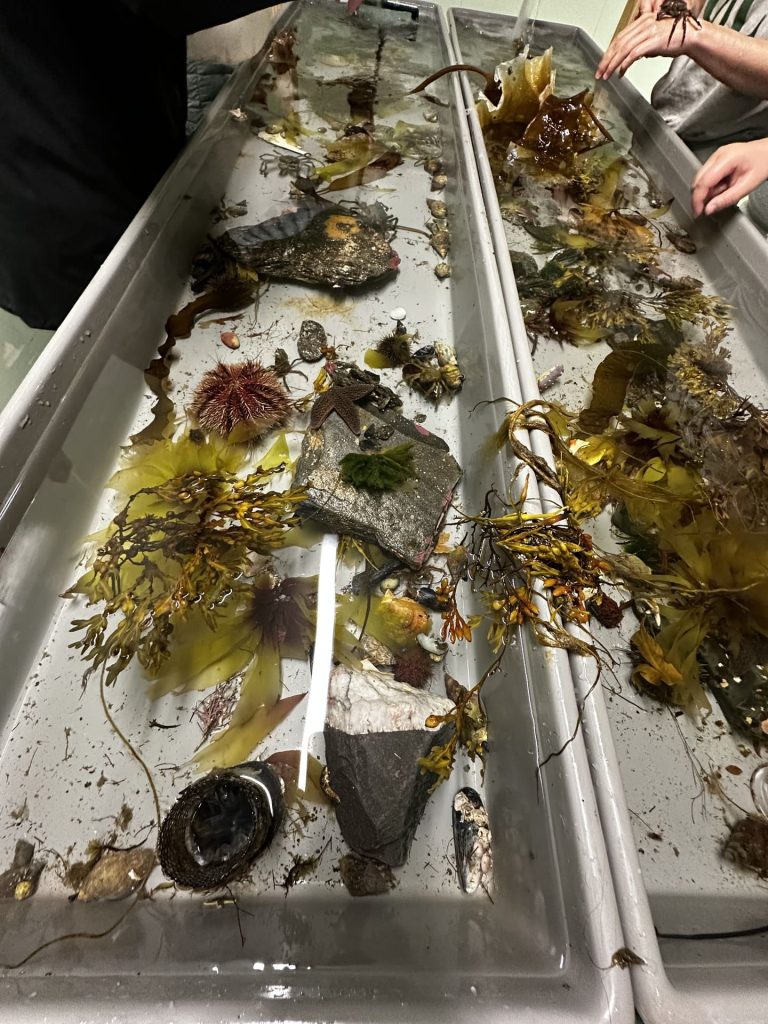
The collected organisms are brought into the lab and transferred to shallow raceways and aquaria for closer inspection. The smallest species are identified under a binocular microscope. Photo credit: Institute of Marine Research.
Swimming above the new reef park
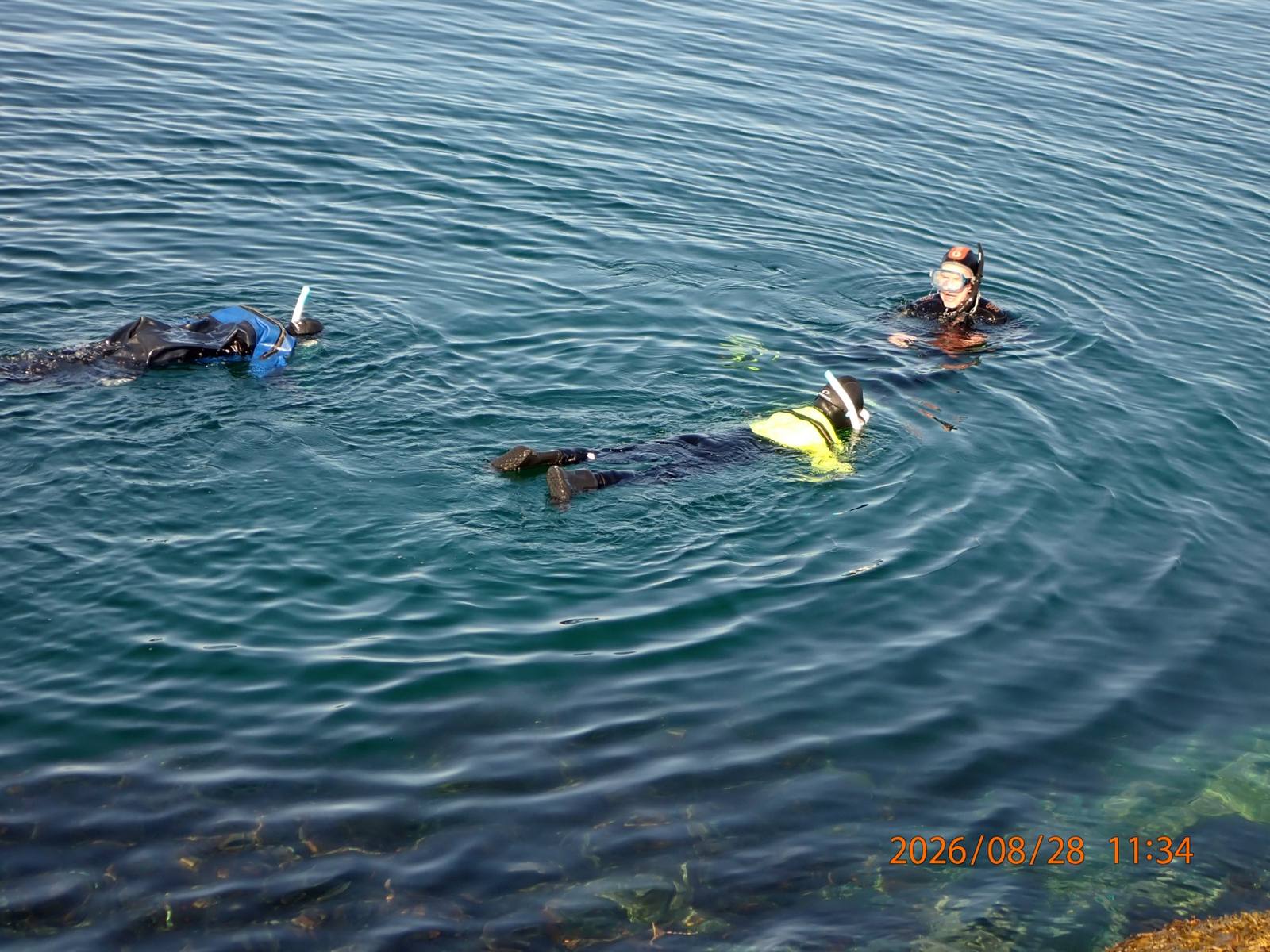
The Biology 2 group took their fieldwork one step further. After completing shoreline sampling, the students geared up in drysuits and swam across the newly deployed Elnida-rif® reef park — 30 artificial reef units installed just one week earlier as part of OCEAN CITIZEN’s efforts to improve juvenile cod survival in the inner Porsangerfjord.
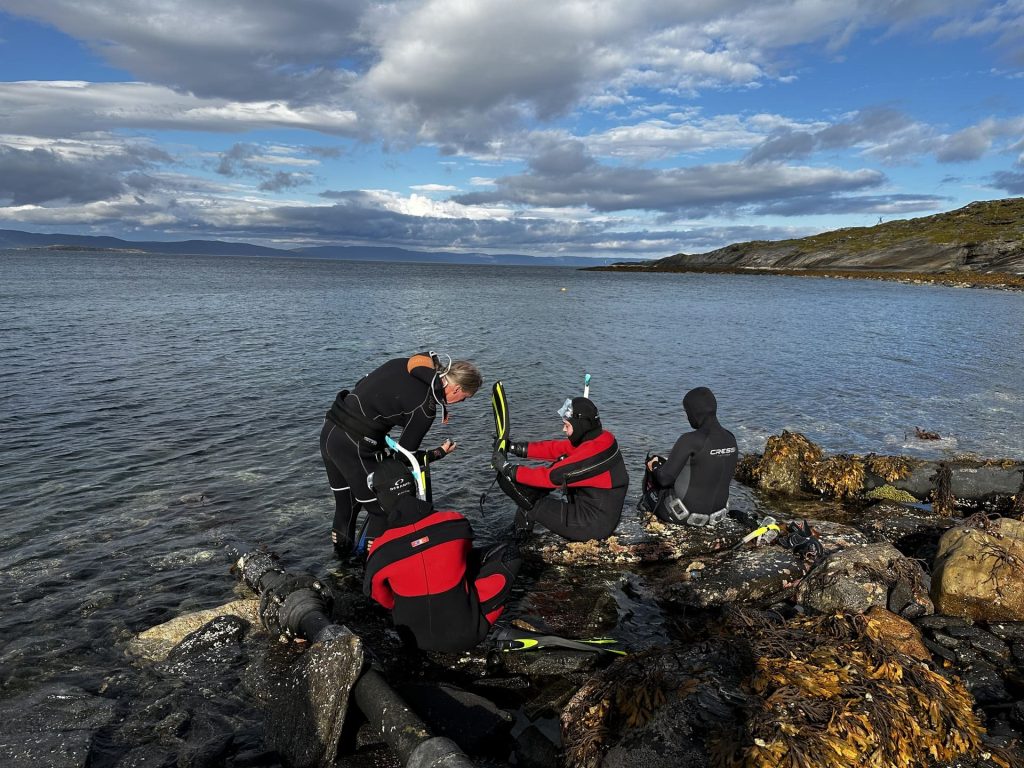
Second-year biology students are allowed to use dry suits to inspect and photo-document life in the subtidal zone. Photo credit: Institute of Marine Research.
For the students, this was their first time observing artificial reefs in situ. They learned how structures like SERs can enhance local habitats, increase recruitment for fjord cod, and support ecosystem recovery in areas where natural kelp forests have declined.
Their post-course assignment focused on population ecology: each pair created a presentation on fjord cod, discussing the environmental factors that affect its population trajectory and evaluating management measures to protect it.
Building ocean literacy and local engagement
For IMR, the collaboration with Lakselv High School is a cornerstone of OCEAN CITIZEN’s citizen-engagement goals. The field course gives students direct experience with marine research while helping them understand how local ecosystems work and how they can be restored.
From hands-on species identification to swimming over a cutting-edge artificial reef installation, the students’ enthusiasm was clear. Their participation strengthens the link between science and society, showing how local knowledge and youth engagement can contribute to healthier fjords.
Stay tuned for more updates from the Porsangerfjord reef park as the SERs continue to be colonized by kelp, small fish, and other marine life in the months ahead.