Last October, the CEAB-CSIC team, in collaboration with the ULPGC team, carried out fifteen intensive days of fieldwork on Gran Canaria as part of a new campaign focused on monitoring the demographic parameters of gorgonian populations and preparing transplants for the next phase of the project: species transplantation.
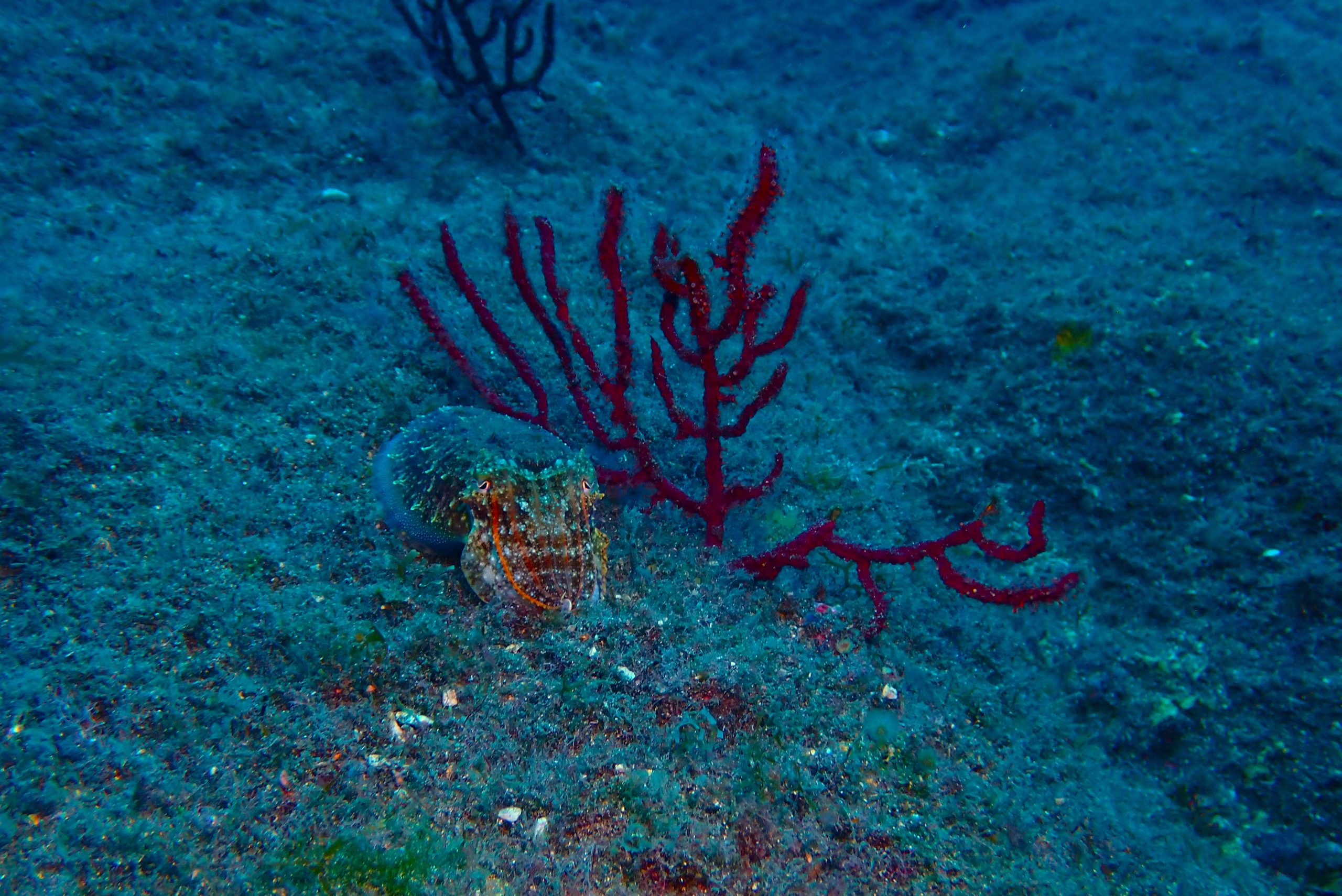
The fieldwork took place at El Roque de Taliarte, near the ECOAQUA-ULPGC facilities. At a depth of approximately 30 meters, this site hosts an extensive natural population of the red gorgonian Leptogorgia ruberrima, as well as several low-density patches of the yellow gorgonian Leptogorgia viminalis.
The main objective of the campaign was to monitor fixed frames installed within the population to study the demographic parameters of Leptogorgia ruberrima. These frames were installed in September 2023 and first monitored in October 2024. Now, two years later, the CEAB-CSIC team returned to assess gorgonian survivorship, growth rates, and overall health, allowing comparisons with data from the previous year. Scuba divers carefully observed the population and collected essential data on these parameters.
In addition, this year the team was able to survey random quadrats within patches of the yellow gorgonian to study certain demographic parameters and compare them with those first recorded in November 2023. The difference in the methodologies used to evaluate demographic parameters between the two species was due to the low density of L. viminalis at this location.
Another major objective was to monitor the floating nurseries deployed in October 2024 and to establish new ones using improved methodologies to increase transplant success. These new nurseries were prepared at the ECOAQUA facilities and, after several days in aquaria, the new nubbins were placed in low-tech structures to promote accelerated growth and allow them to reach a suitable size for transplantation to Tenerife.
Additionally, the team replaced seawater temperature sensors to extend the time series of environmental data from the gorgonians’ natural habitat. These data are essential for detecting thermal anomalies that could induce changes in gorgonian populations.
In conclusion, this field campaign allowed the collection of extensive data that will enhance our understanding of the two dominant shallow-water gorgonians in the Canary Islands. Furthermore, it contributed to refining the methodology that will be implemented in the restoration plan scheduled to take place this year in Punta Blanca, Tenerife.
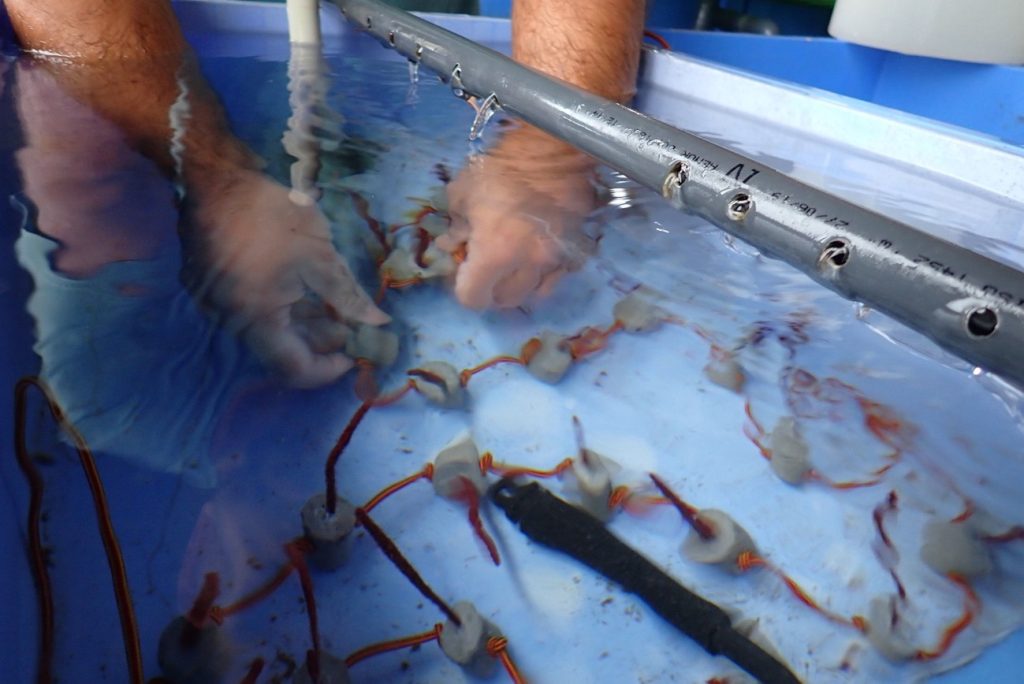
Scientist ensuring the good condition of red gorgonian fragments (Leptogorgia ruberrima) in the ECOAQUA lab facilities. Photo credit: Manel Bolivar (CEAB-CSIC).
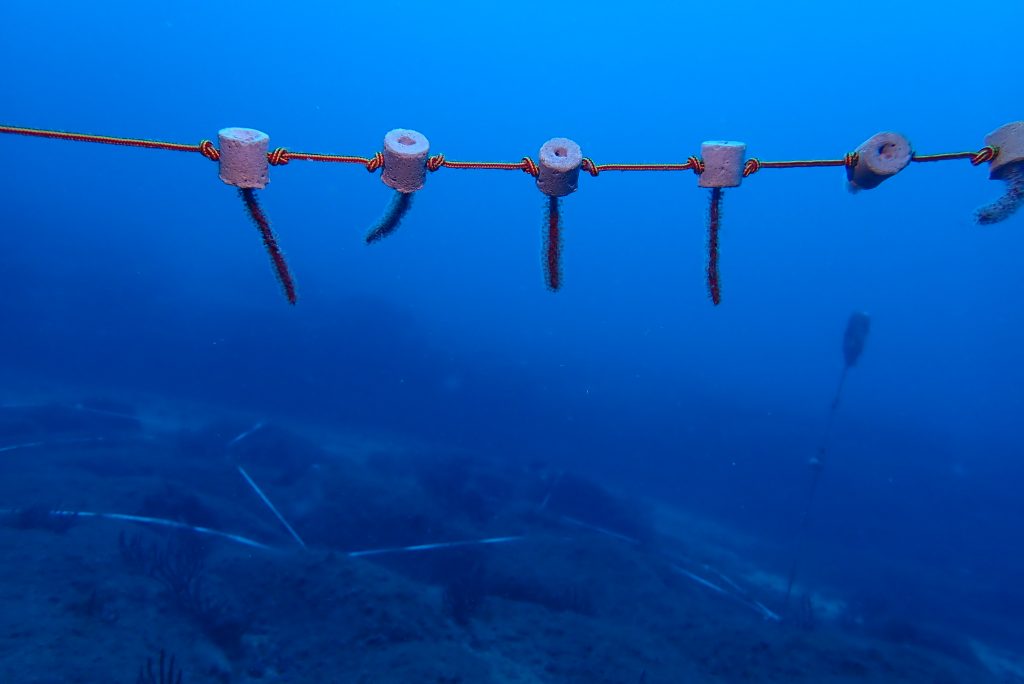
Fragments of red gorgonian with open polyps (Leptogorgia ruberrima) installed in floating nurseries within the natural population of “El Roque de Taliarte”, Gran Canaria. Photo credit: Gerard Mas (CEAB-CSIC).