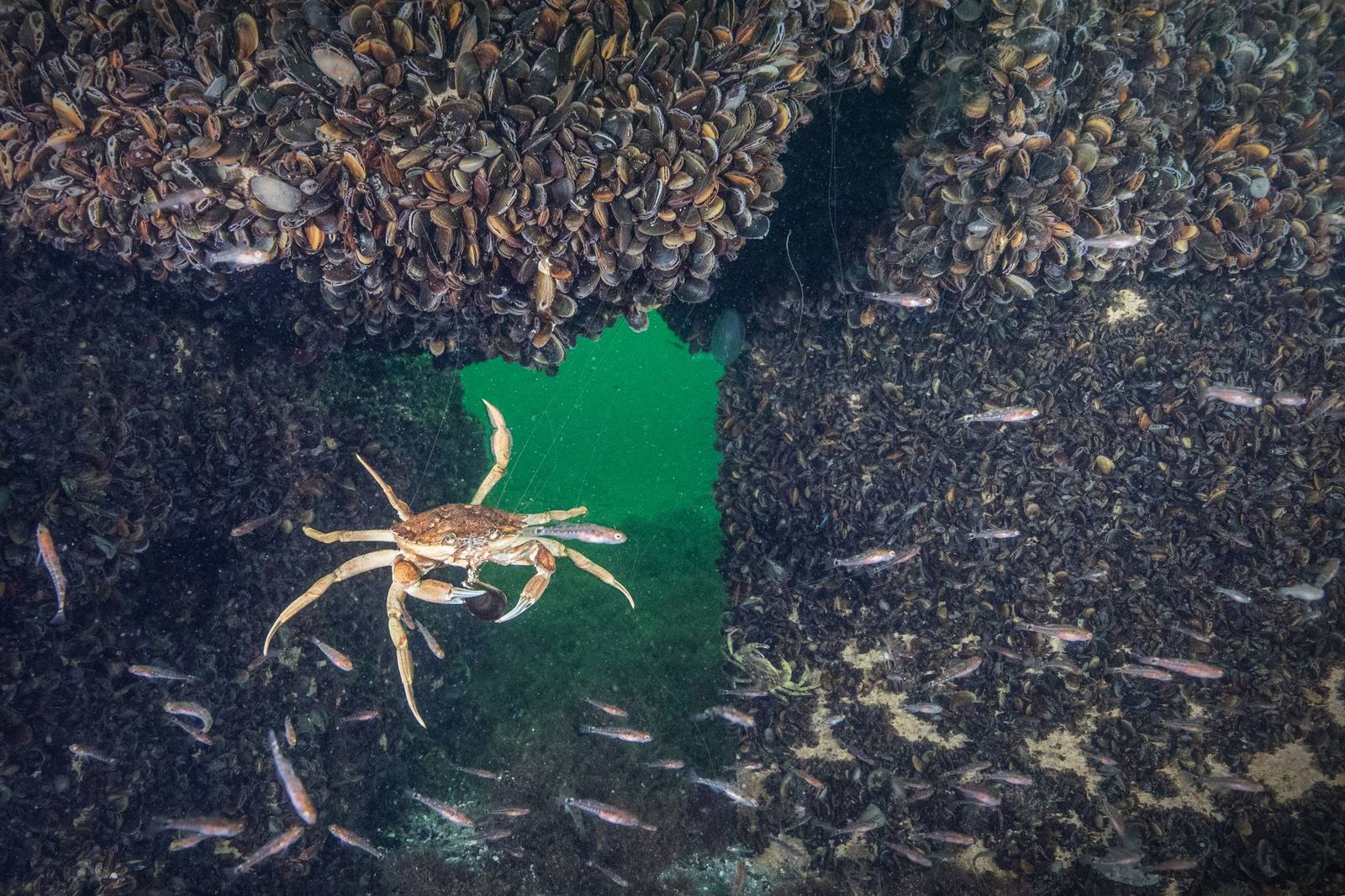

Transplanted L. sarmentosa. Photo credits: Max Rota.
In Torredembarra (Tarragona), the OCEAN CITIZEN team from the University of Barcelona is studying and restoring a gorgonian community composed of Eunicella cavolini, Eunicella verrucosa and Leptogorgia sarmentosa. These octocoral species play a key structural role in Mediterranean benthic ecosystems, forming three-dimensional habitats that enhance biodiversity and support a wide range of associated marine life.
E. cavolini (Koch, 1887), E. verrucosa (Pallas, 1766) and L. sarmentosa (Esper, 1791) are gorgonians that play an important structural role in Mediterranean benthic ecosystems. They belong to the group of octocoral cnidarians and present a branched morphology. Each gorgonian is a colony composed of polyps that are distributed within the gorgonian branches. The branches are arranged in a fan-shape [1], mostly in one plane growing perpendicular to the predominant current, to optimize the food capture by the polyps.
E. cavolini is a yellow-orange gorgonian that usually lives on rocky bottoms and coralligenous assemblages [2]. E. verrucosa also colonizes hard bottoms, although these are often partially covered by a thin layer of sediment [3]. L. sarmentosa displays intense hues of orange, magenta, yellow or white and branches in a dichotomous way [4]. It can grow on rocky bottom but commonly lives on gravel in detritic and soft bottoms on horizontal, sediment covered substrates [5], in turbid waters and under strong currents [6, 7].

Transplanted E. cavolini. Photo credits: Max Rota
Gorgonians feed on a wide range of Particulate Organic Matter (POM) from pico- and nanoplankton to microplankton [8, 9, 10, 11]. The three species are dioecious and reproduce sexually with males spawning their sperms, which fertilize eggs spawned by female colonies (L. sarmentosa and E. verrucosa) or maintained inside the polyps in the female colonies (E. cavolini) [12, 13]. The resulting zygote develops into a planktonic planula larva that will settle and grow into a new gorgonian colony.
In the Mediterranean Sea, gorgonians are among the main structuring species in benthic ecosystems [14]. Their three-dimensional structure increases habitat complexity [2]. These structures serve as refuges or nurseries for many associated species [15], enhancing biomass and species diversity. Furthermore, gorgonian forests provide crucial ecosystem services to society [16] as tourism attraction, food supply or water filtering.
Gorgonians are extremely susceptible to a wide range of impacts due to their slow population dynamics. Mediterranean gorgonians have experienced mass mortality events [17, 18] due to marine heatwaves [19] and the direct impacts of human activities causing mechanical damage because of fishing and diving [20].
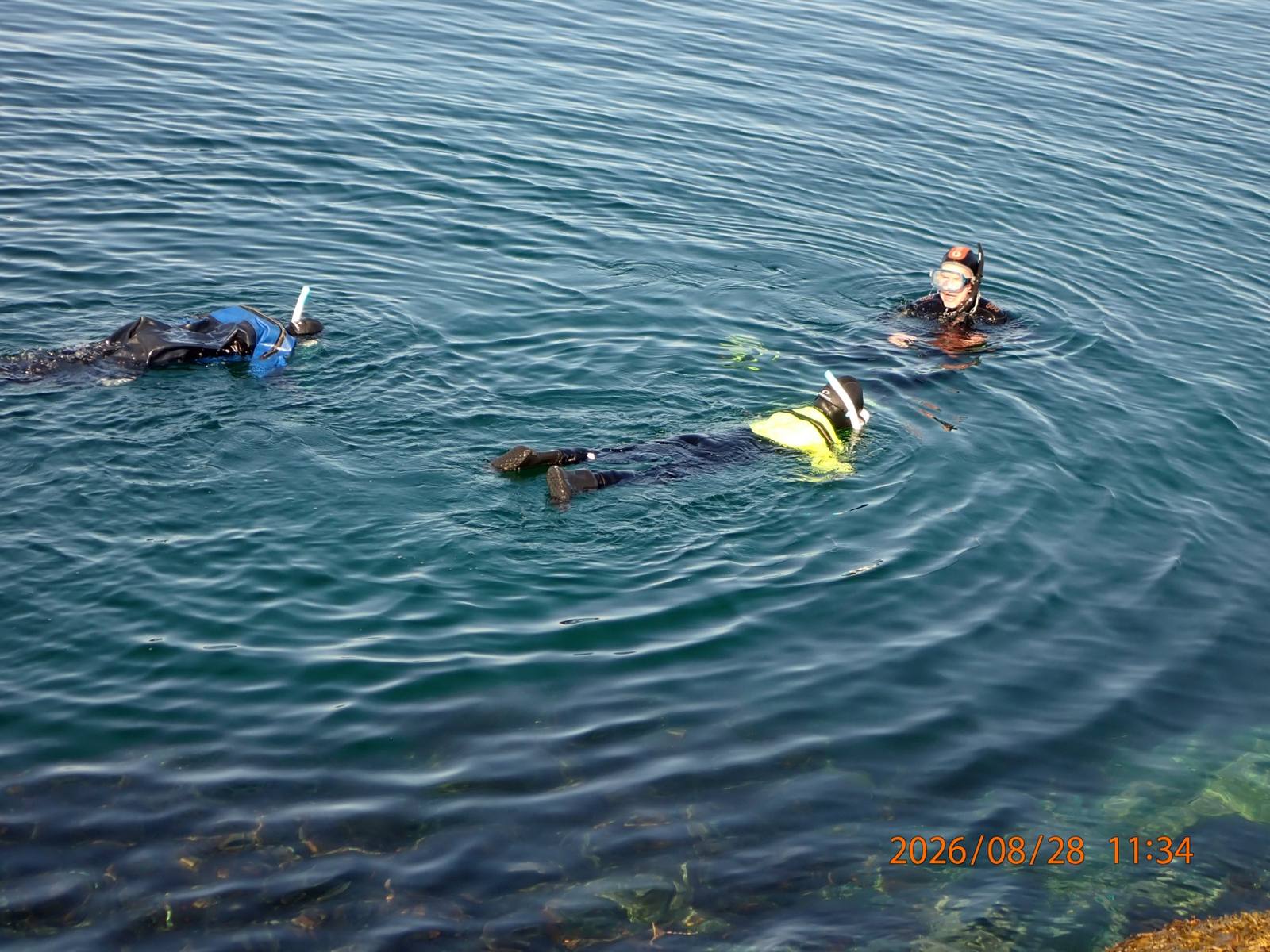
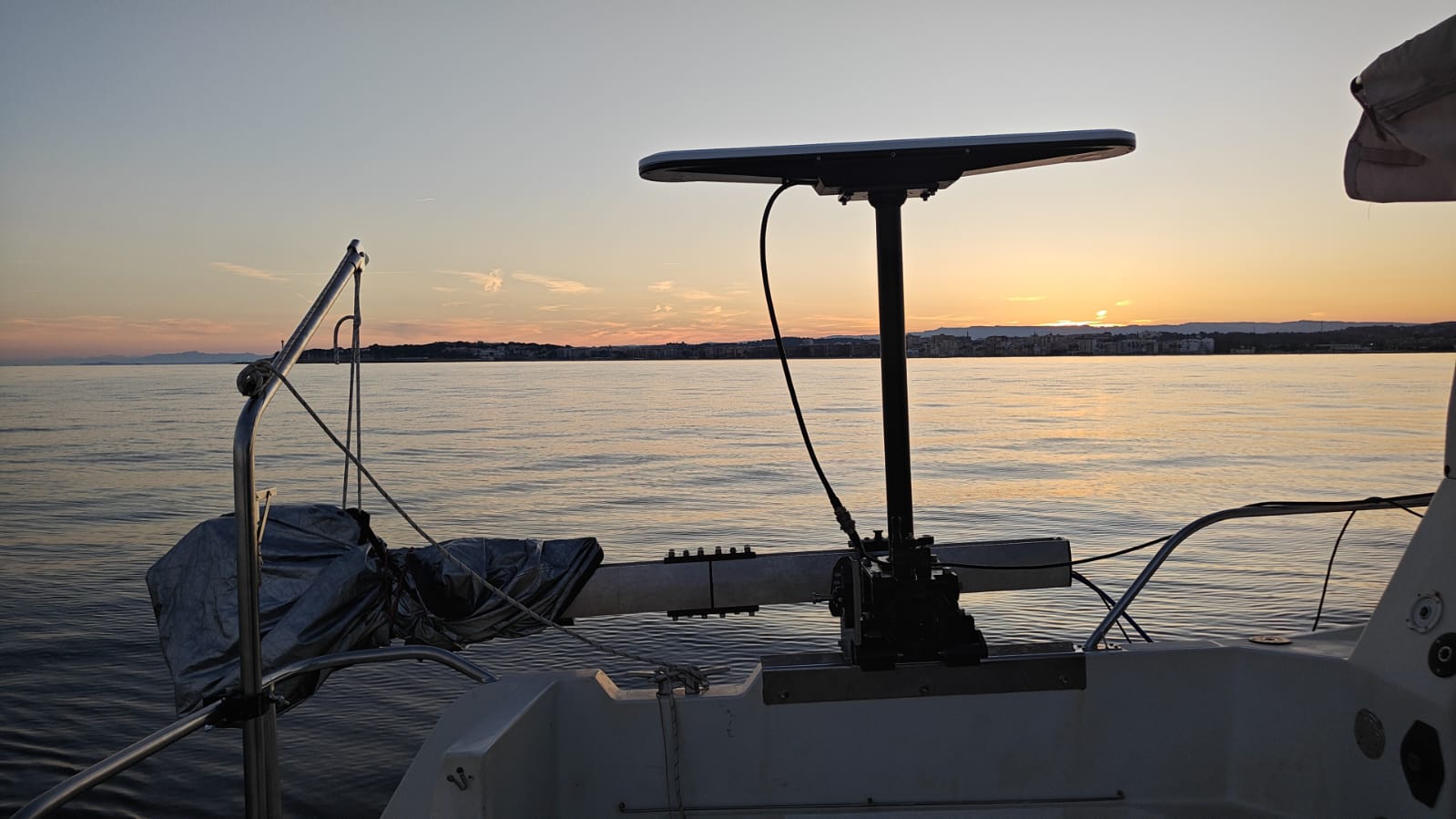
In Torredembarra (Tarragona) the UB team of OCEAN CITIZEN is restoring a gorgonian community composed of E. cavolini, E. verrucosa and L. sarmentosa at 32 m depth in El Biòtop, an artificial submarine structure created and managed by Natural Art Reef Association. Gorgonian fragments were collected from a nearby gorgonian forest at 48 m depth. Growth, mortality, and associated species are quantified every six months. The environmental conditions at the restoration site are being monitored. Temperature, turbidity, and current direction and speed are recorded every 20 minutes with sensors attached to a mooring placed a few meters from the restoration site. A sediment trap is also installed on the mooring, and monthly CTD profiles are performed.
- Carpine, C., Grasshoff, M. (1975) LES GORGONAIRES DE MEDITERRANEE, Institut Océanographique – Fondation Albert 1er, 140p.
- Ballesteros, E. (2006). Mediterranean coralligenous assemblages: A synthesis of present knowledge. Oceanography and Marine Biology: An Annual Review, 44, 123–195.
- Chimienti, G. (2020). Vulnerable Forests of the Pink Sea Fan Eunicella verrucosa in the Mediterranean Sea. Diversity, 12(5), 176. https://doi.org/10.3390/d12050176
- Weinberg, S. (1977). Revision of the common Octocorallia of the Mediterranean circalittoral II. Alcyonacea. Beaufortia, 25, 131-166. http://archive.org/details/beaufortia-25-131-166
- Pérès, J. M. (1967). The mediterranean benthos. Oceanography and Marine Biology: An Annual Review, 5, 449–533.
- Rossi, L. (1965). Influenza dei fattori ambientali sulla facies a Gorgonacei di Punta Mesco (Riviera di Levante). Bollettino di Zoologia, 32(2), 859-865. https://doi.org/10.1080/11250006509441032
- Weinberg, S. (1979). Autecology of shallow-water octocorallia from Mediterranean rocky substrata, I. The Banyuls Area. Bijdragen Tot de Dierkunde, 49(1), 1-15. https://doi.org/10.1163/26660644-04901001
- Coma, R., Gili, J.-M., Zabala, M., & Riera, T. (1994). Feeding and prey capture cycles in the aposymbiontic gorgonian Paramuricea clavata. Marine Ecology Progress Series, 115(3), 257-270. https://doi.org/10.3354/meps115257
- Coma, R., & Ribes, M. (2003). Seasonal Energetic Constraints in Mediterranean Benthic Suspension Feeders: Effects at Different Levels of Ecological Organization. Oikos, 101(1), 205-215. https://doi.org/10.1034/j.1600-0706.2003.12028.x
- Ribes, M., Coma, R., & Rossi, S. (2003). Natural feeding of the temperate asymbiotic octocoral-gorgonian Leptogorgia sarmentosa (Cnidaria: Octocorallia). Marine Ecology Progress Series, 254, 141-150. http://dx.doi.org/10.3354/meps254141
- Rossi, S., Ribes, M., Coma, R., & Gili, J. M. (2004). Temporal variability in zooplankton prey capture rate of the passive suspension feeder Leptogorgia sarmentosa (Cnidaria: Octocorallia), a case study. Marine Biology, 144(1), 89-99. https://doi.org/10.1007/s00227-003-1168-7
- Rossi, S., & Gili, J. M. (2009). Reproductive features and gonad development cycle of the soft bottom-gravel gorgonian Leptogorgia sarmentosa (Esper, 1791) in the NW Mediterranean Sea. Invertebrate Reproduction & Development, 53(4), 175-190. https://doi.org/10.1080/07924259.2009.9652304
- Egger, C., Melo, C., Marquardt, B., Engelen, A. H., Melzer, R. R., Santos, E., Fernandes, M., Baylina, N., Serrão, E. A., & Coelho, M. A. G. (2025). Reproductive phenology and sexual propagation of the pink sea fan Eunicella verrucosa (Pallas, 1766): Implications for coral restoration. Coral Reefs, 1-25. https://doi.org/10.1007/s00338-025-02705-x
- Jones, C. G., Lawton, J. H., & Shachak, M. (1994). Organisms as Ecosystem Engineers. Oikos, 69(3), 373-386. https://doi.org/10.2307/3545850
- Miller, R. J., Hocevar, J., Stone, R. P., & Fedorov, D. V. (2012). Structure-Forming Corals and Sponges and Their Use as Fish Habitat in Bering Sea Submarine Canyons. PLOS ONE, 7(3), e33885. https://doi.org/10.1371/journal.pone.0033885