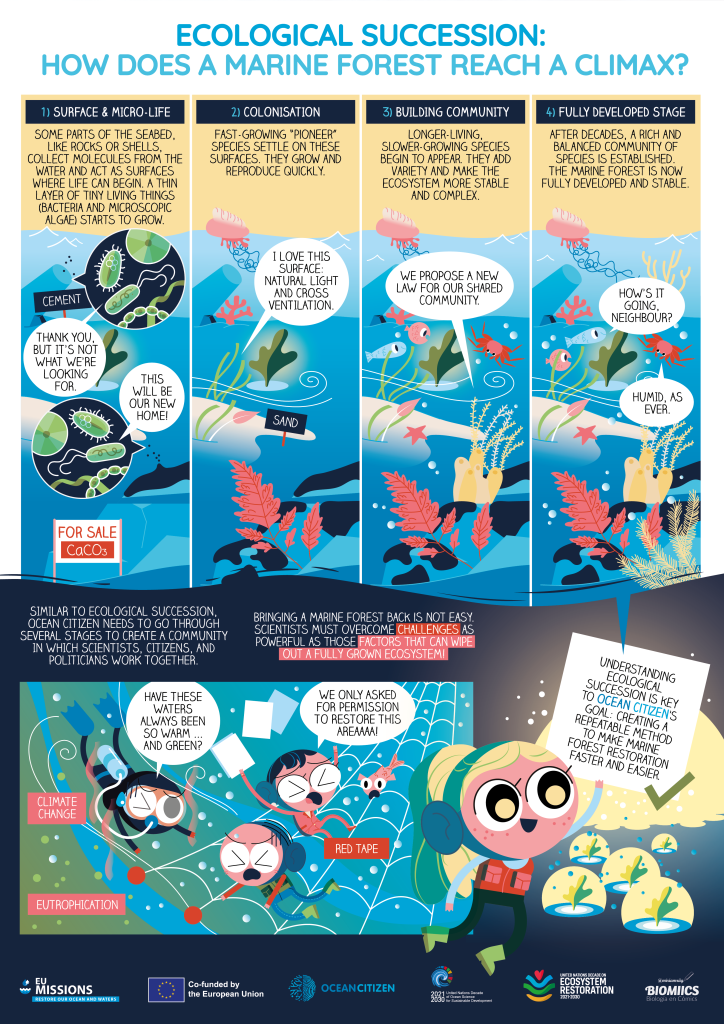

Released on World Ocean Day, the third edition of the OCEAN CITIZEN comic series continues exploring the science behind marine restoration through illustration, humour and accessible storytelling. Following the previous chapters dedicated to marine forests and the challenges and processes behind their restoration, this new edition introduces readers to ecological succession and how underwater ecosystems gradually grow, change and become more complex over time, when no disturbances alter this process.
How does a marine forest grow?
Marine forests do not appear overnight. They develop through ecological succession: a natural process in which species communities and habitats change overtime, gradually creating increasingly stable, diverse and resilient ecosystems.
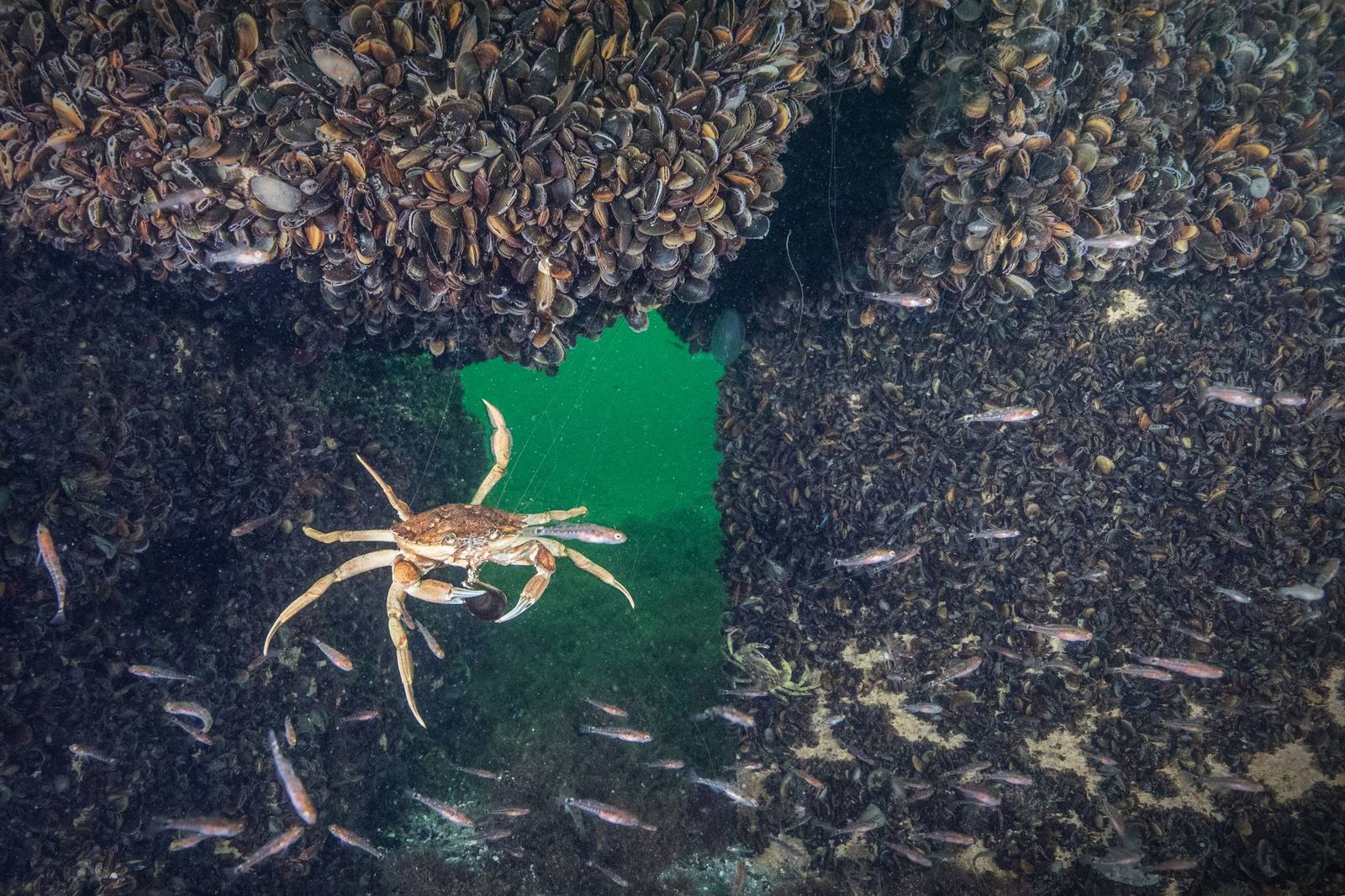
What may initially seem like an empty underwater surface can become the foundation of a rich marine community. From microscopic life forms and pioneer species to longer-living organisms that contribute to ecosystem complexity and resilience, each stage plays a role in shaping a fully developed marine forest.
This chapter explores how these ecological communities evolve over time, helping readers better understand why marine forest restoration is not immediate, but depends on long-term ecological balance, adaptation and interaction among species.
Marine restoration requires collaboration across communities
Beyond ecological succession itself, the comic also draws a parallel between the gradual development of marine ecosystems and the process of marine restoration project. Just as underwater communities evolve through different stages before becoming stable and balanced, restoring marine forests also requires time, multiple phases and the collaboration of different actors working towards a shared goal.
Scientists, citizens, policymakers and local stakeholders all play a role in this collective process. By linking ecological succession to marine restoration projects, the story highlights that meaningful environmental recovery is not immediate. It depends on long-term cooperation, adaptation and shared responsibility, all affected by different kinds of disturbances, that challenges both processes.
The comic also reflects some of the challenges that both marine ecosystems and restoration efforts face today, including climate change, eutrophication and administrative barriers. Despite these obstacles, the story ultimately conveys a hopeful message about the importance of understanding natural processes while working collectively to protect and restore the ocean.
Explore more about marine forest restoration through our comic series
Through this third chapter, readers can explore how ecological succession shapes marine ecosystems and why understanding these natural processes matters for restoration. We invite you to discover the comic and revisit the previous editions of the series to continue exploring the science, challenges and collaborative efforts behind marine forest restoration.
If you would like to dive deeper into the concept of ecological succession beyond the comic, you can also read our news post on ecological succession in marine environments.