WORDS FROM “CONSORCIO PARA EL DISENO, CONSTRUCCION, EQUIPAMIENTO Y EXPLOTACION DE LA PLATAFORMA OCEANICA DE CANARIAS” (PLOCAN)
Welcome to the ninth edition of the OCEAN CITIZEN newsletter!
By Nalu Franco
Within the framework of the OCEAN CITIZEN project, PLOCAN contributes to the environmental monitoring and technological infrastructure supporting the restoration and experimental activities carried out in the Canary Islands.
The main objective of PLOCAN’s work is to provide continuous oceanographic observations and data infrastructure to better understand the environmental conditions of the restoration sites and support the assessment of ecosystem responses to restoration and aquaculture-based solutions.
In the coastal area of Los Cristianos, where the project will conduct experiments with Integrated Multi-Trophic Aquaculture (IMTA), PLOCAN has deployed a set of oceanographic instruments to characterize the physical and biogeochemical conditions of the water column. These include a CTD equipped with a dissolved oxygen sensor and an Acoustic Doppler Current Profiler (ADCP) to measure current dynamics. In the near future, two nutrient sensors will also be installed to measure concentrations of nitrite (NO₂), nitrate (NO₃), ammonia (NH₃) and phosphate (PO₄). These measurements will help researchers understand the capacity of the IMTA system to absorb and recycle nutrients released by fish farming activities, providing key information to evaluate the environmental performance and sustainability of this approach.
In addition, PLOCAN will deploy two environmental monitoring stations in the restoration area of Punta Blanca at different depths. Each station will include a UVP6 sensor, designed to quantify zooplankton and suspended particles in the water column, a hydrophone to characterize the underwater soundscape and detect cetaceans, and a chlorophyll sensor to monitor phytoplankton dynamics. By collecting continuous data from different depths, these monitoring stations will contribute to a better understanding of ecosystem functioning and biological activity in the restoration site.
Beyond field instrumentation, PLOCAN is also responsible for supporting the data infrastructure and logistical coordination of monitoring activities within Work Package 4 (WP4). This includes facilitating the integration, management and accessibility of environmental data generated by the different partners involved in the project, ensuring that the information collected across sites and disciplines can effectively support the scientific assessment of marine forest restoration.
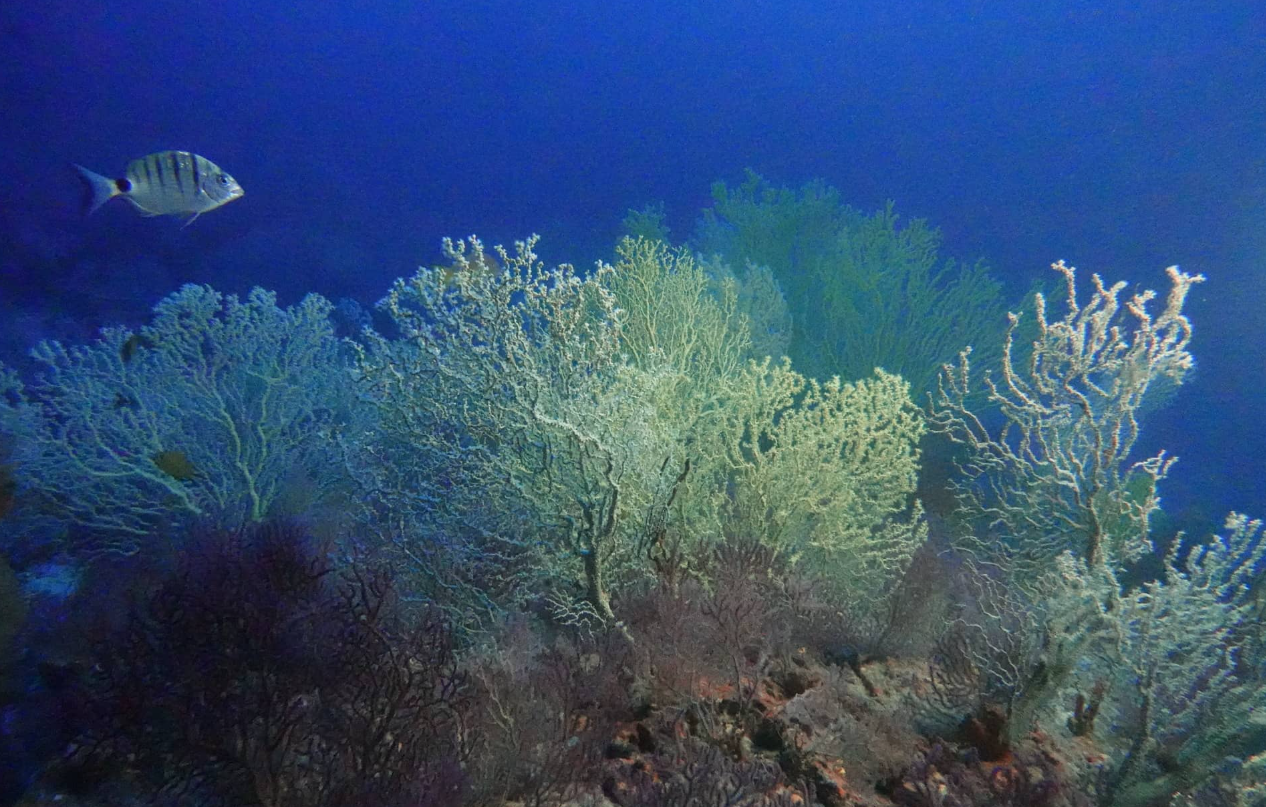
NEW MARINE ANIMAL FORESTS MANIFESTO CALLS FOR URGENT MEASURES TO PROTECT UNDERWATER FORESTS
The Marine animal Forests Manifestohas been launched, representing an important milestone for the international community working to protect and restore Marine Animal Forests (MAFs). This initiative emerges from the MAF-WORLD COST Action, a network that has brought together researchers, policymakers, and institutions from across the globe to advance the understanding, visibility, and conservation of these essential yet often overlooked underwater ecosystems.
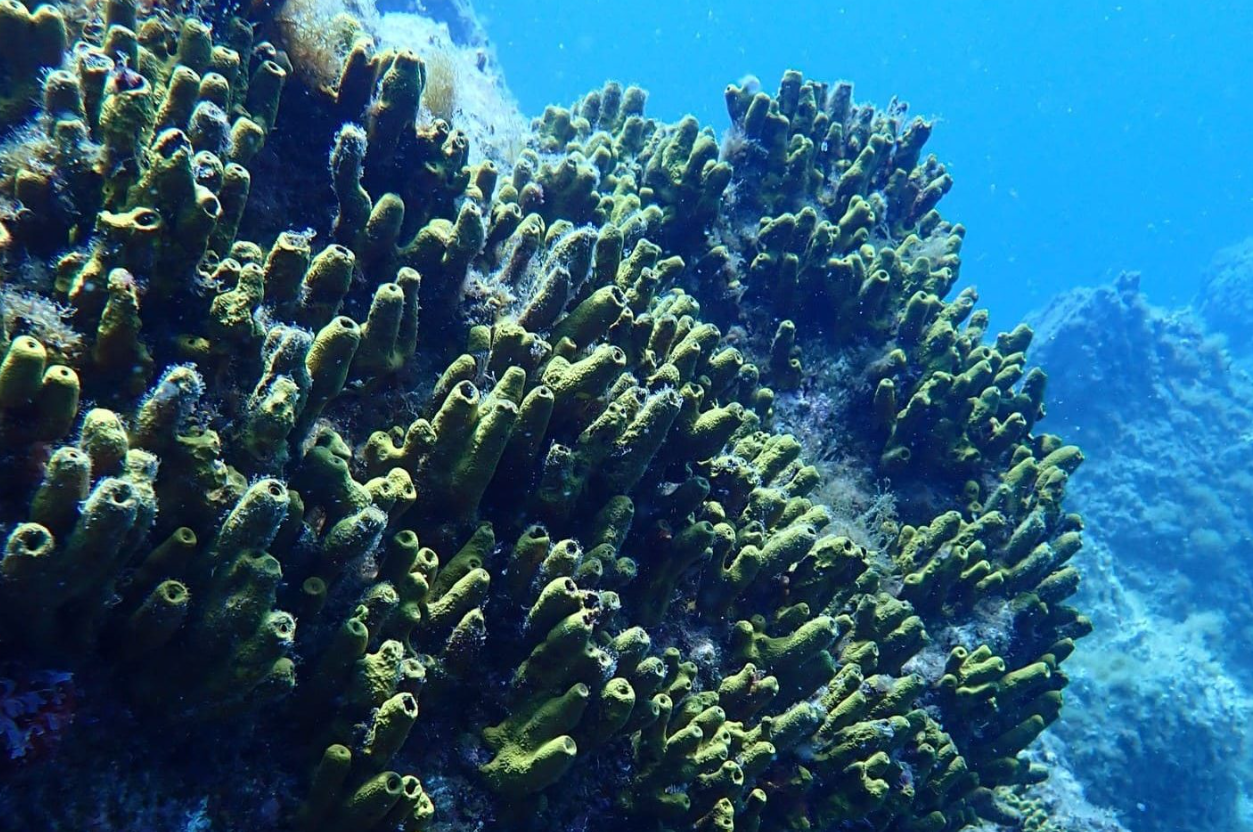
THE YELLOW ARCHITECT OF TENERIFE’S UNDERWATER FORESTS
In the clear waters off southwest Tenerife, a quiet but powerful restoration effort is underway. At the heart of this initiative lies the sponge Aplysina aerophoba, whose vibrant yellow tubes do not go unnoticed, but whose ecological importance is profound. As part of the OCEAN CITIZEN project, this sponge is one of the selected species to be transplanted onto the artificial reefs that will be installed near Punta Blanca.
FIRST PRESENCE REGISTERED BEYOND 80M OF THIS GREEN ALGAE IN TENERIFE
A new bathymetric record of the green macroalga Caulerpa prolifera has been documented for the southwest coast of Tenerife Island, in the framework of the OCEAN CITIZEN project.
RESTORING A GORGONIAN COMMUNITY IN TORREDEMBARRA
In Torredembarra (Tarragona), the OCEAN CITIZEN team from the University of Barcelona is studying and restoring a gorgonian community composed of Eunicella cavolini, Eunicella verrucosa and Leptogorgia sarmentosa.
THE MODEL CORAL THAT SHAPES THE FUTURE OF REEF RESTORATION
Within OCEAN CITIZEN, research activities in the pilot site of Eilat focus on model coral species such as Stylophora pistillata, supporting studies on coral growth, reef restoration and carbon dynamics in the Red Sea.
EXPLORING FJORD LIFE TOGETHER: LAKSELV HIGH SCHOOL JOINS OCEAN CITIZEN AT THE IMR FIELD STATION IN NORWAY
Citizen involvement is at the heart of the OCEAN CITIZEN project and 38 students helped bring that mission to life at the Institute of Marine Research’s field station in Holmfjord, Porsangerfjorden.
THIRD RESEARCH CAMPAIGN IN TORREDEMBARRA BY THE UNIVERSITY OF BARCELONA AND UBICA FOR GORGONIAN RESTORATION AND ENVIRONMENTAL MONITORING
The OCEAN CITIZEN team at the University of Barcelona carried out the third research campaign in Torredembarra, one of the project’s five pilot sites, conducted in close collaboration with the Natural Art Reef Association and project partner UBICA.

UNDERSTANDING BLUE FORESTS: INSIGHTS FROM OCEAN CITIZEN’S FALL WEBINAR SERIES
Last fall, between November and December 2025, OCEAN CITIZEN hosted its first three-part webinar miniseries, Understanding Blue Forests, bringing together researchers from across Europe to explore the fundamental role of marine forests in sustaining ocean life acress Europe to explore the fundamental role of marine forests in sustaining ocean life and regulating global climate.
NEW WEBINAR MINISERIES: RESTORING ACROSS DEPTHS
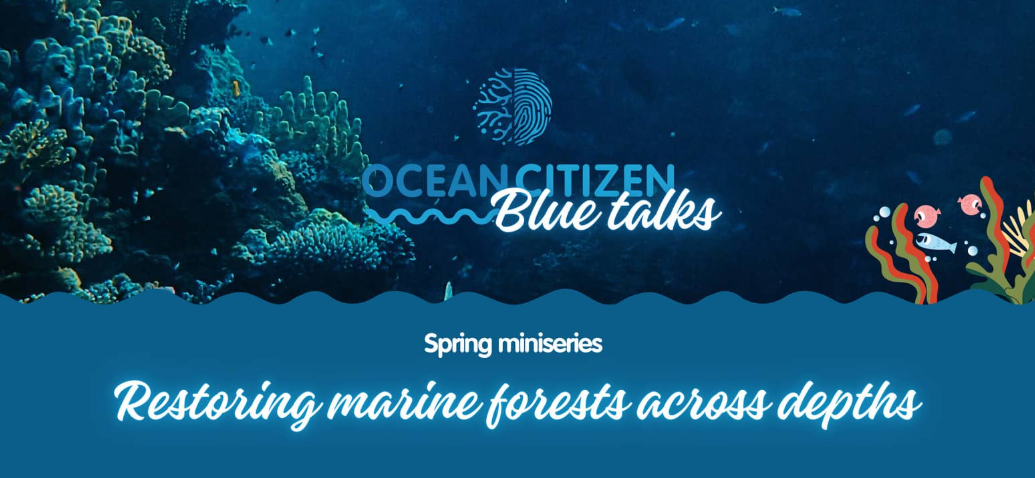
Life between tides: Restoring macroalgae forests
Tuesday April 14th 2026 at 17:00 CET
Speaker: A. Falace, researcher at CONISMA
This session explores the vital role of intertidal macroalgae – the “seaweed forests” that shelter coastal life, protect shorelines, and kickstart marine productivity.
Shallow meadows: The lungs of the ocean
Tuesday April 21st 2026 at 17:00 CET
Speaker: N. Marbà, researcher at CSIC – IMEDEA
Discover how these green engineers store carbon, stabilize the seabed and nurture young fish and invertebrates.
Restoring gorgonian forests: From science to success
Tuesday April 28th 2026 at 17:00 CET
Speakers: R. Coma & G. Màs, researchers from CEAB
This session explores the essential first steps behind successful restoration, from understanding ocean conditions and popular dynamics to testing thermal tolerance and improving transplant survival.
The twilight zone: Mesophotic coral ecosystems
Tuesday May 5th 2026 at 17:00 CET
Speakers: F. Otero (ULPGC) & L. Bramanti (CNRS)
This episode unveils how researchers from OCEAN CITIZEN are exploring and restoring these little-known ecosystems at 70 metres and beyond.