Image 1. Photo credits: Helene-Julie Zofia Paamand.
Authors: Cæcilie Erichsen Kudsk, Lars Emil Juel Andersen, Allan Scheller, Patrizio Mariani & Jon C. Svendsen.
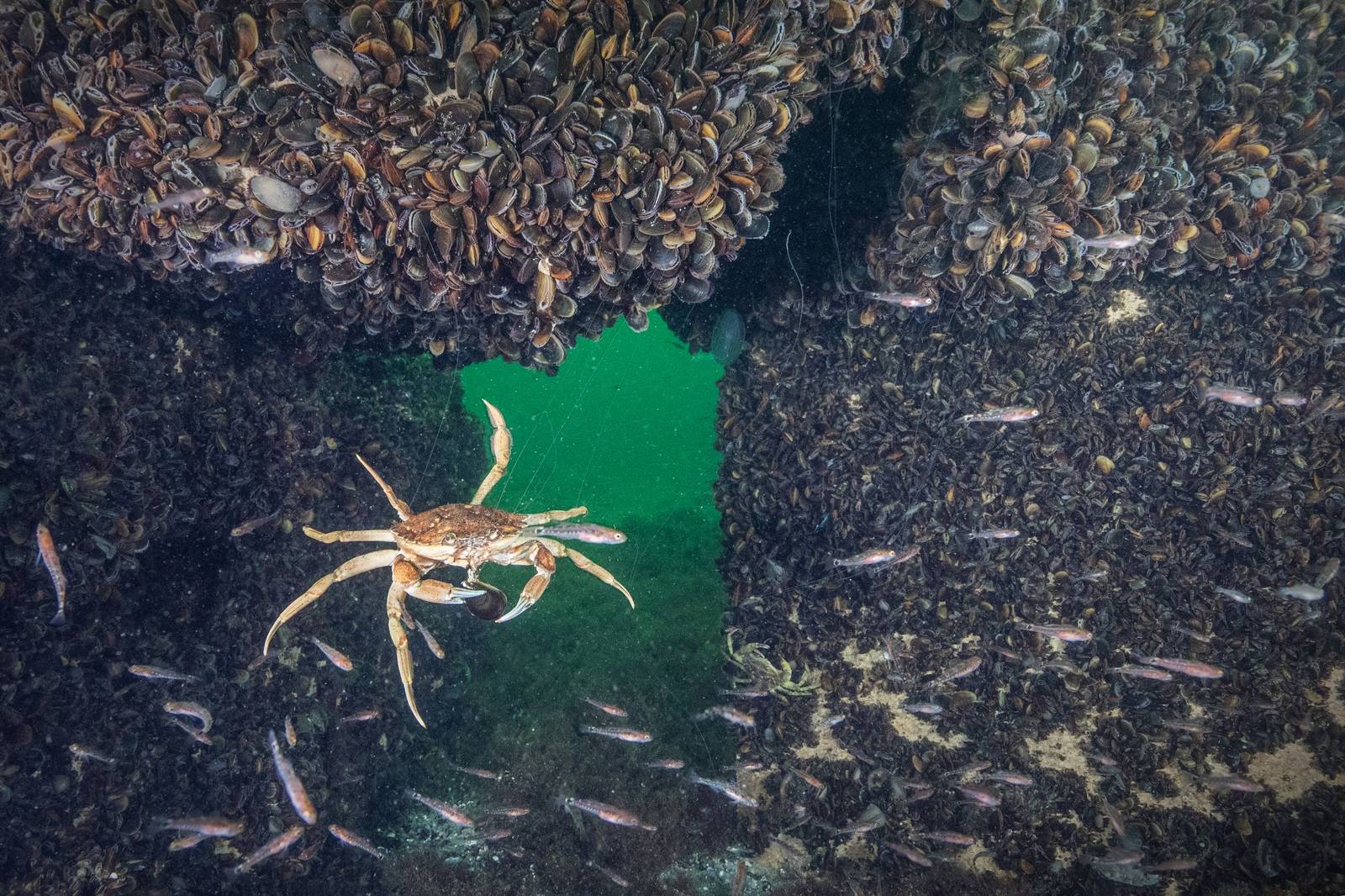
Recently, researchers investigated the new concrete reefs in Køge Bay. They were greeted by an exciting discovery: the concrete reefs are being colonised by mussels. Thousands of them.
These pioneering settlers are the first “ocean citizens” to utilize this newly established habitat, marking an important milestone for the project.
The mussels are an encouraging sign that the reef is already becoming part of the local ecosystem. By attaching themselves to the concrete surfaces, mussels help create additional habitat complexity and can provide food and shelter for other species. Mussels are strong filter feeders that remove plankton and suspended particles from the water column. Their filtration capacity is influenced by several factors, including shell size, water temperature, food availability, and hydrodynamic conditions.
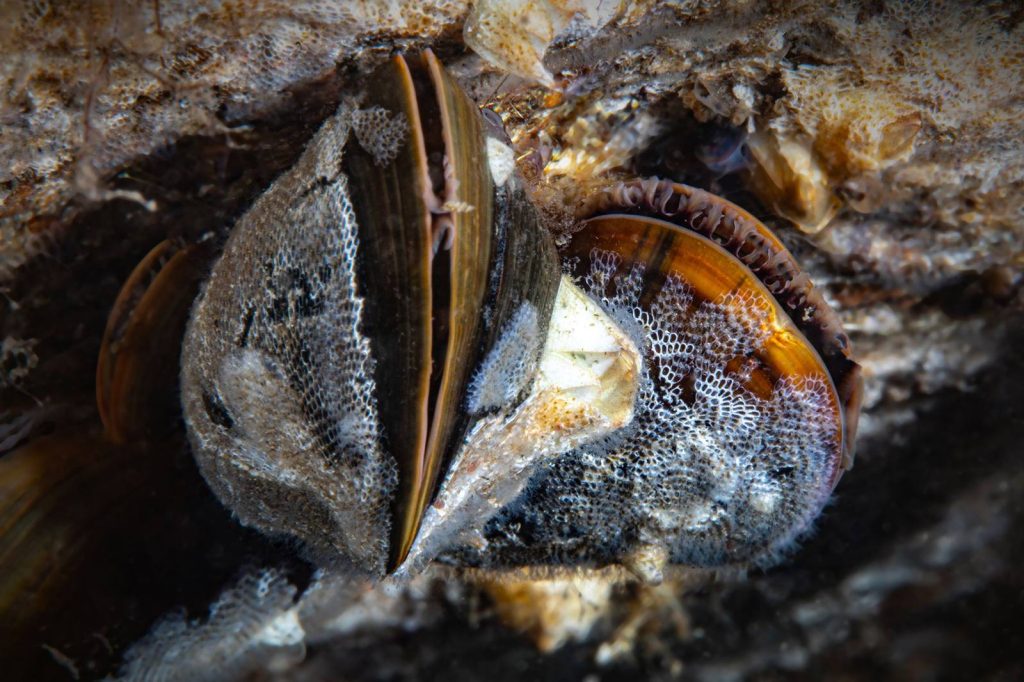
Image 2. Close-up of blue mussels (Mytilus sp.) attached to the concrete reef. Photo credits: Helene-Julie Zofia Paamand.
Concrete reef in Køge Bay
The concrete reefs were installed in spring 2025 and consist of concrete blocks arranged to form artificial reef structures. These reefs are created to provide habitat and shelter for a wide range of marine life.
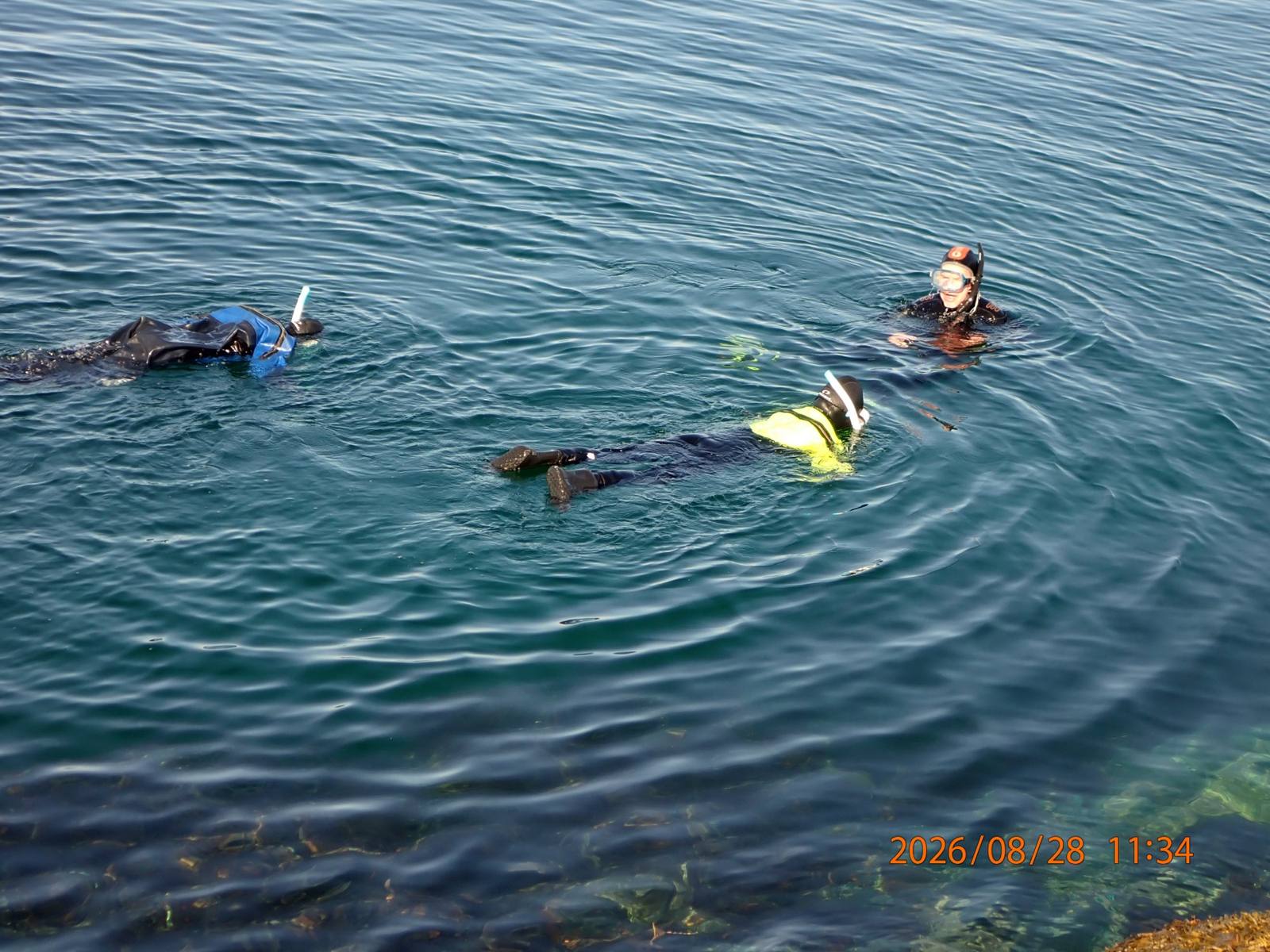
The project aims to investigate how artificial reefs influence local marine biodiversity. Using underwater cameras, the reef areas are being monitored to document its developing marine life and assess changes in the abundance of fish and other mobile fauna.
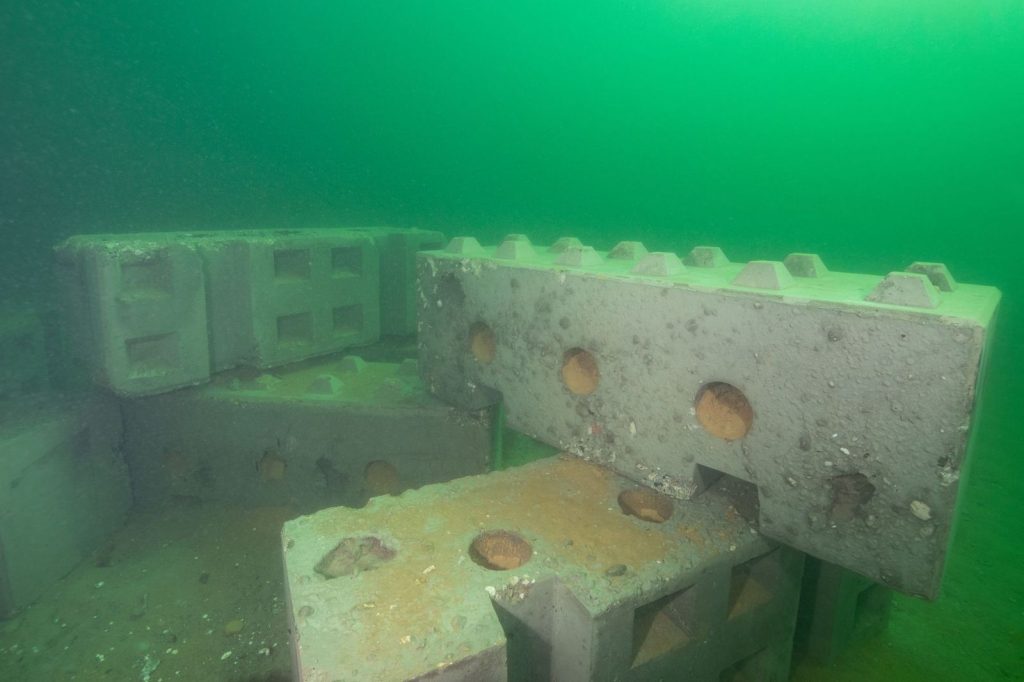
Image 3. Newly established concrete reef in spring 2025. Photo credits: Helene-Julie Zofia Paamand.
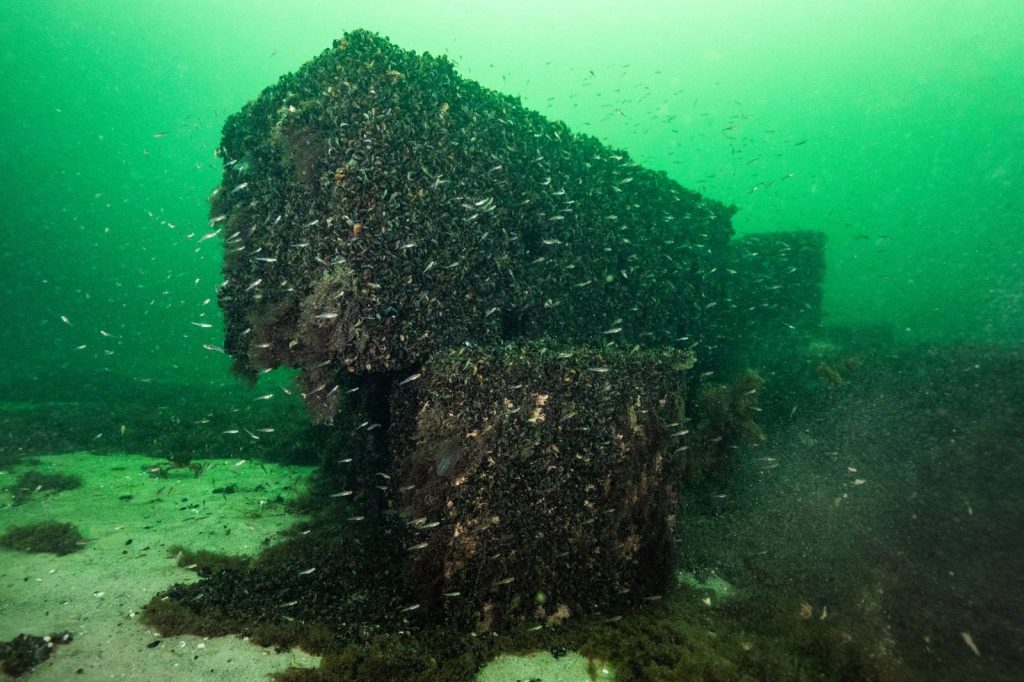
Image 4. The concrete reef in autumn 2026, approximately 18 months after deployment. It has already been colonised by mussels and many small fish. Photo credits: Helene-Julie Zofia Paamand.
Monitoring the marine growth on the concrete reef
Marine growth on the concrete reef was accurately monitored in June 2025 and surveyed again 14 months later (September 2026). A metal frame (30 x 30 cm) has been used as a reference, and underwater images were collected and combined into detailed 3D models. This method enables researchers to identify which species had settled on the concrete reef and to estimate how much biomass they had stored.
The surveys showed that settled mussels were the dominant inhabitants of the concrete reef. Analysis of the 3D reconstruction yielded an estimated colonising-layer volume of approximately 0.6 L within the survey frame. This suggests substantial biological growth over a relatively short period. Future investigations within the project will focus on relating reconstructed volume to measured mussel biomass and quantifying the associated biogenic carbon stock, alongside monitoring fish biodiversity around the structure.
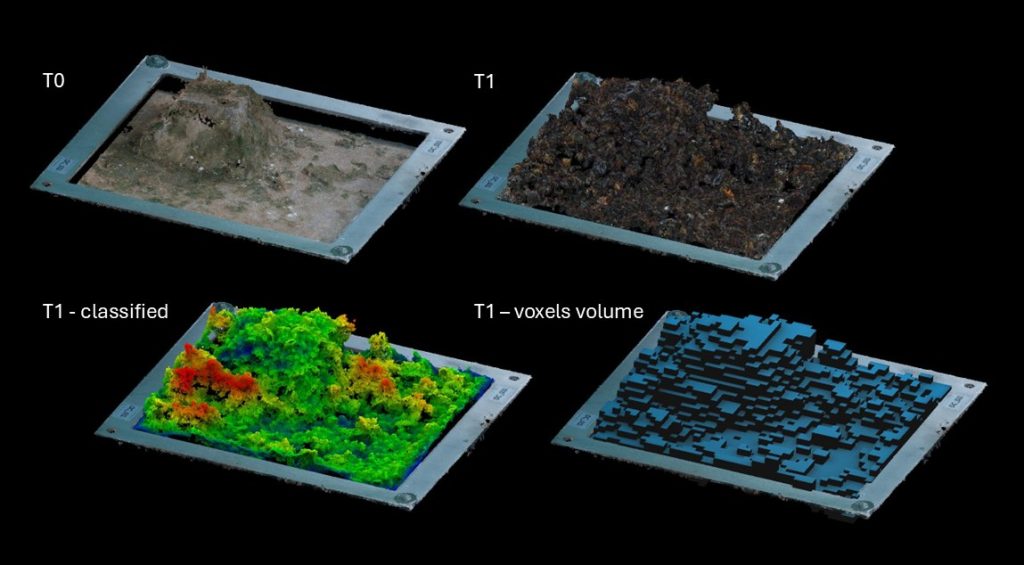
Image 5. Monitoring the marine growth on the concrete reef using a metal frame (30 x 30 cm), underwater images and the voxels method to calculate volumes. In the figure, T0 is the baseline for the newly deployed concrete reef; T1 is the 3D model 14 months after the concrete reef deployment. Voxel computation is then performed to calculate the additional volume created on the reef relative to the initial baseline.
Partners and monitoring collaboration
The concrete reef project is part of the OCEAN CITIZEN project. The concrete reef blocks were produced by Dalgas A/S and developed in collaboration with DTU Aqua, DTU Sustain and the consultancy company WSP, with additional input from Underwater Gardens International (UGI) during the development process.
DTU Aqua monitors the artificial concrete reef in collaboration with the local NGO Køge Bugt Stenrev and Ishøj Municipality. The colonising-layer volume estimates have been performed by UBICA. The project is co-funded by the Velux Foundation. Further information is available in this film.