WORDS FROM “THE INSTITUTE OF MARINE RESEARCH” (IMR)

Welcome to the tenth edition of the OCEAN CITIZEN newsletter!
By Hans Kristian Strand
In the Norwegian OCEAN CITIZEN case study, the Institute of Marine Research is working in the high north, in Porsangerfjord, one of the large fjord systems in Finnmark. Our work focuses on a central question in marine restoration: can we help rebuild degraded coastal ecosystems by restoring the habitats and ecological functions that young fish depend on?
Porsangerfjord has undergone major ecological changes over the past decades. Local fjord cod populations have declined, former spawning areas in the inner fjord are no longer active, and extensive grazing by sea urchins has transformed large areas of kelp forest into urchin barrens. This loss of three-dimensional habitat is likely to have reduced shelter and feeding opportunities for juvenile cod and other coastal species.
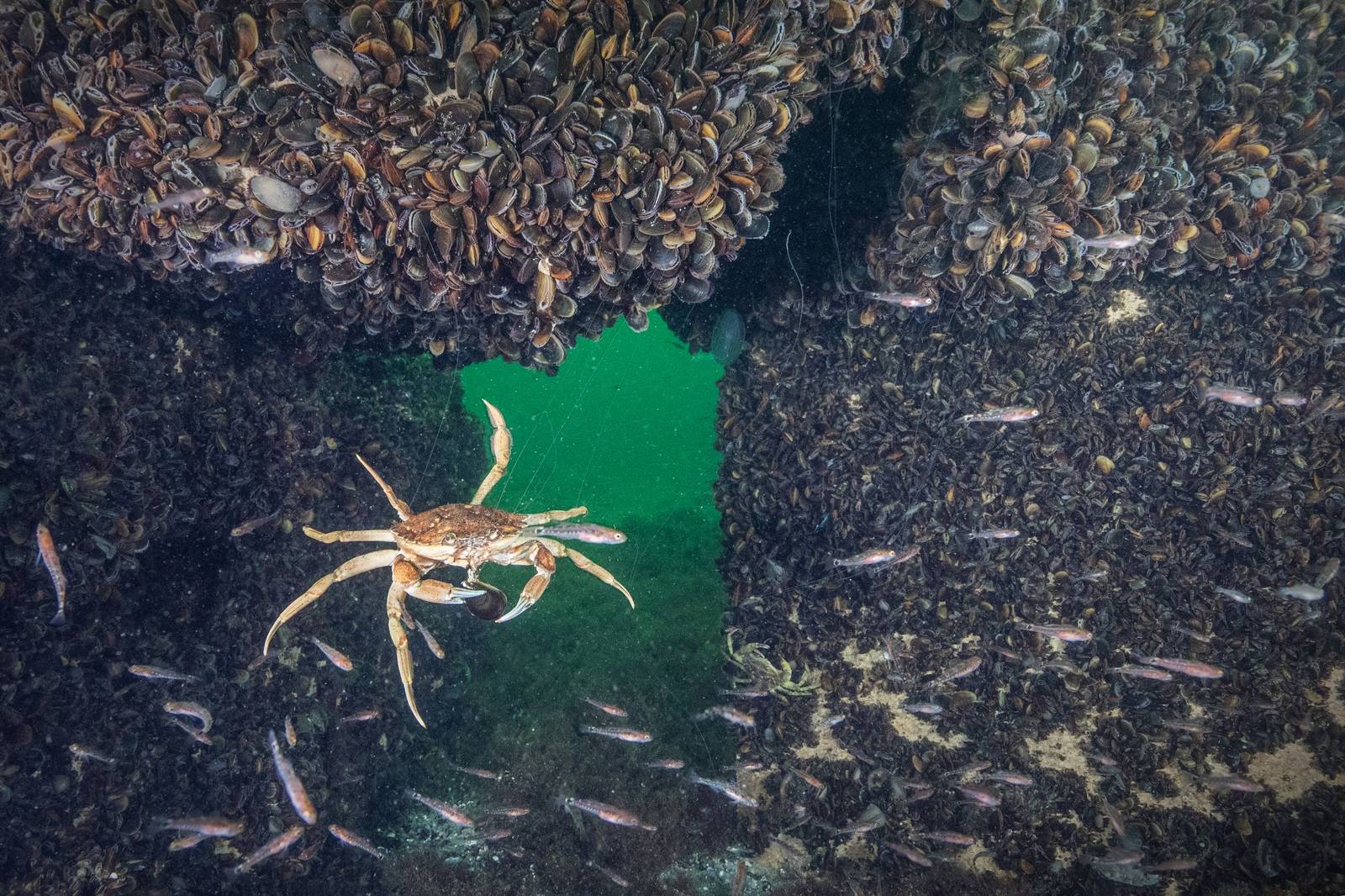
Within OCEAN CITIZEN, IMR is testing whether engineered reef structures can help recreate some of the nursery function once provided by kelp forests. In August 2025, we deployed 30 Smart Enhanced Reefs (SERs) in the Porsangerfjord. These structures are designed to provide immediate shelter for juvenile fish and to become colonized by kelp and associated marine life over time. By combining artificial habitat with natural colonization processes, we aim to evaluate whether such structures can support biodiversity, improve juvenile fish survival and become part of a broader fjord restoration toolbox.
The SER deployment is being followed up with field monitoring, including visual surveys with cameras and ROVs, documentation of kelp establishment, associated fauna and fish use of the structures. The work also connects to IMR’s broader restoration efforts in Porsangerfjord, where habitat restoration, local cod recovery, spatial protection and cooperation with local communities are being considered together.
An important part of the Norwegian case is also our collaboration with Lakselv Upper Secondary School. Students take part in field courses at the IMR field station in Holmfjord, where they receive a thorough introduction to the ecological challenges in the fjord, the role of kelp forests and sea urchin barrens, and the restoration approaches being tested through OCEAN CITIZEN. This gives young people in the local community first-hand insight into marine research and the future management of their own coastal environment.
For us, OCEAN CITIZEN provides an important framework for testing practical restoration methods under Arctic conditions, while also linking the Norwegian case to complementary restoration experiences across Europe. The work is still experimental, but it represents an important step towards understanding how active habitat restoration can contribute to the recovery of cold-water coastal ecosystems.

ADVANCING ON THE GORGONIAN MONITORING AND RESTORATION IN GRAN CANARIA
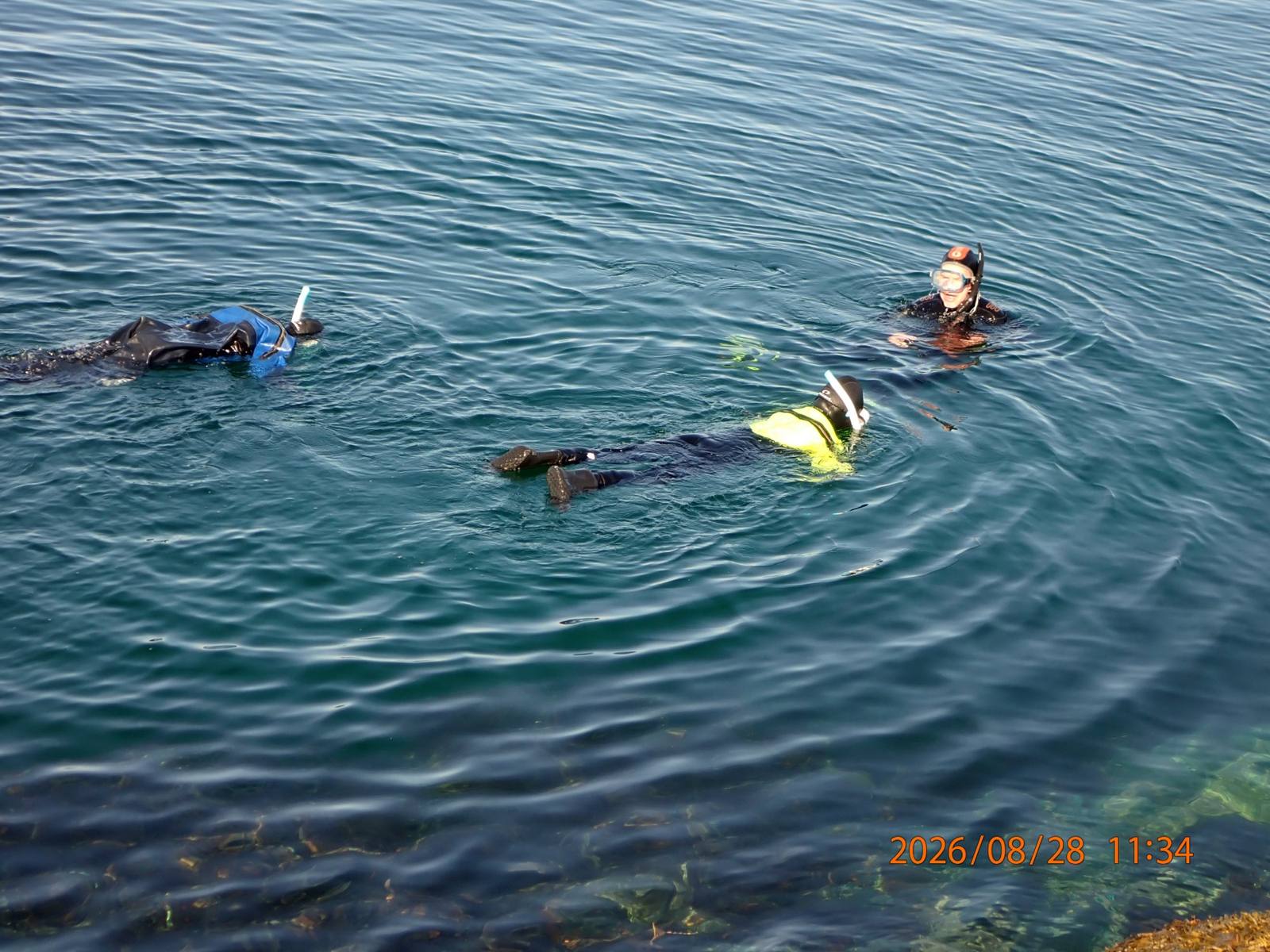
The CEAB-CSIC team, in collaboration with the ULPGC team, carried out fifteen intensive days of fieldwork on Gran Canaria as part of a new campaign focused on monitoring the demographic parameters of gorgonian populations and preparing transplants for the next phase of the project: species transplantation.
UNDERSTANDING ECOLOGICAL SUCCESSION THROUGH THE THIRD CHAPTER OF OUR COMIC SERIES
The third edition of the OCEAN CITIZEN comic series continues exploring the science behind marine restoration through illustration, humour and accessible storytelling.
NEW PUBLICATIONS RELATED TO THE ADVANCEMENTS OF OCEAN CITIZEN
Check out the newest publications related to interesting topics and OCEAN CITIZEN.
MOOC ON CITIZEN SCIENCE
Discover how science and society can work together to restore our ocean. This MOOC offers a space to learn about marine ecosystems and explore how citizens and researchers can work side by side in marine forest regeneration.
OCEAN CITIZEN ANNUAL MEETING IN COPENHAGEN

From 24 to 26 March, OCEAN CITIZEN partners gathered in Copenhagen for the project’s annual meeting. Over the three days, the consortium worked together to review progress, address ongoing challenges, and plan the next steps of the project.